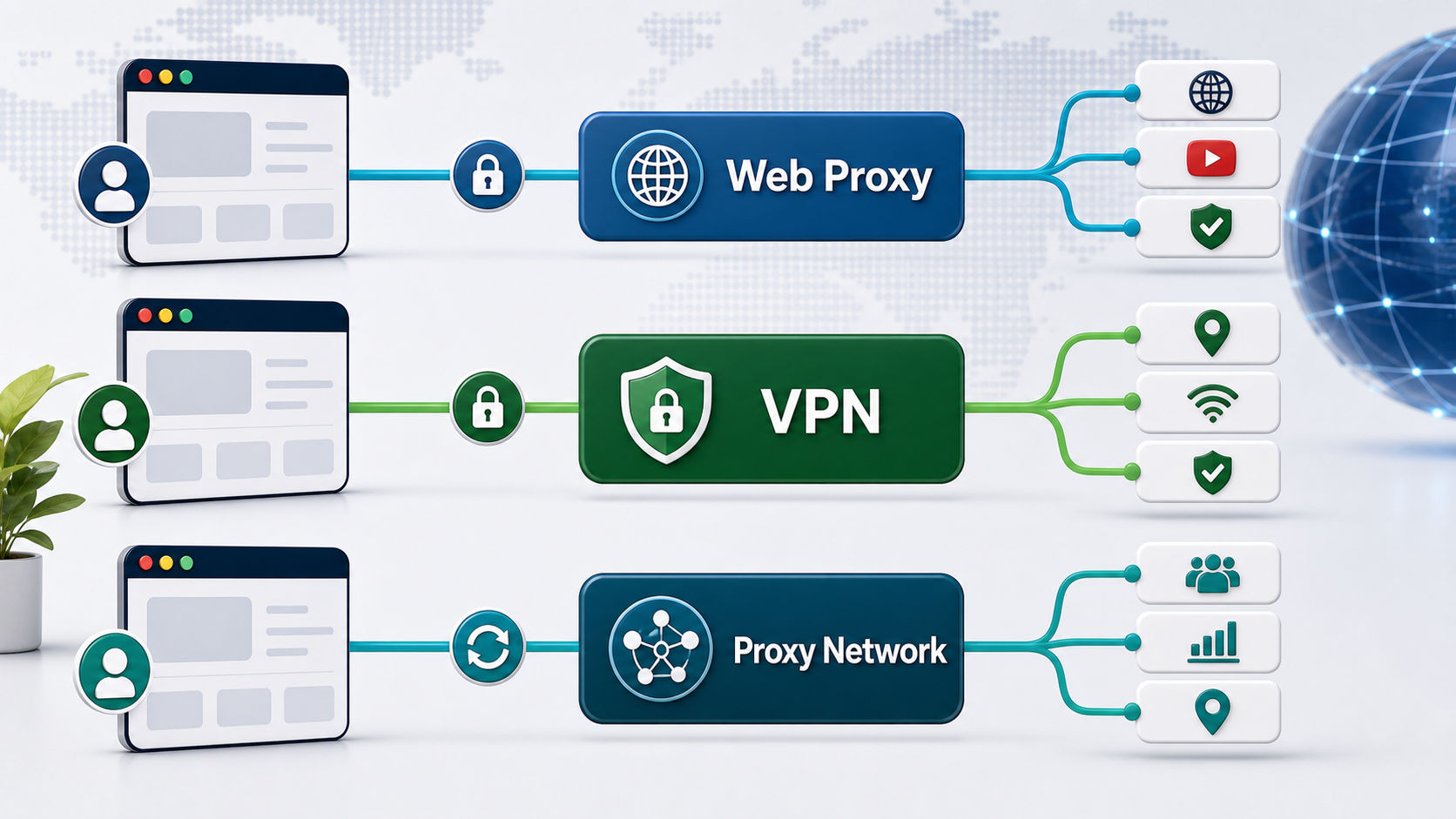
BlockAway Alternatives: Best Proxy, VPN, and Web Proxy Options Compared helps readers match BlockAway-related search intent to the right safety, troubleshooting, comparison, or proxy-infrastructure decision.
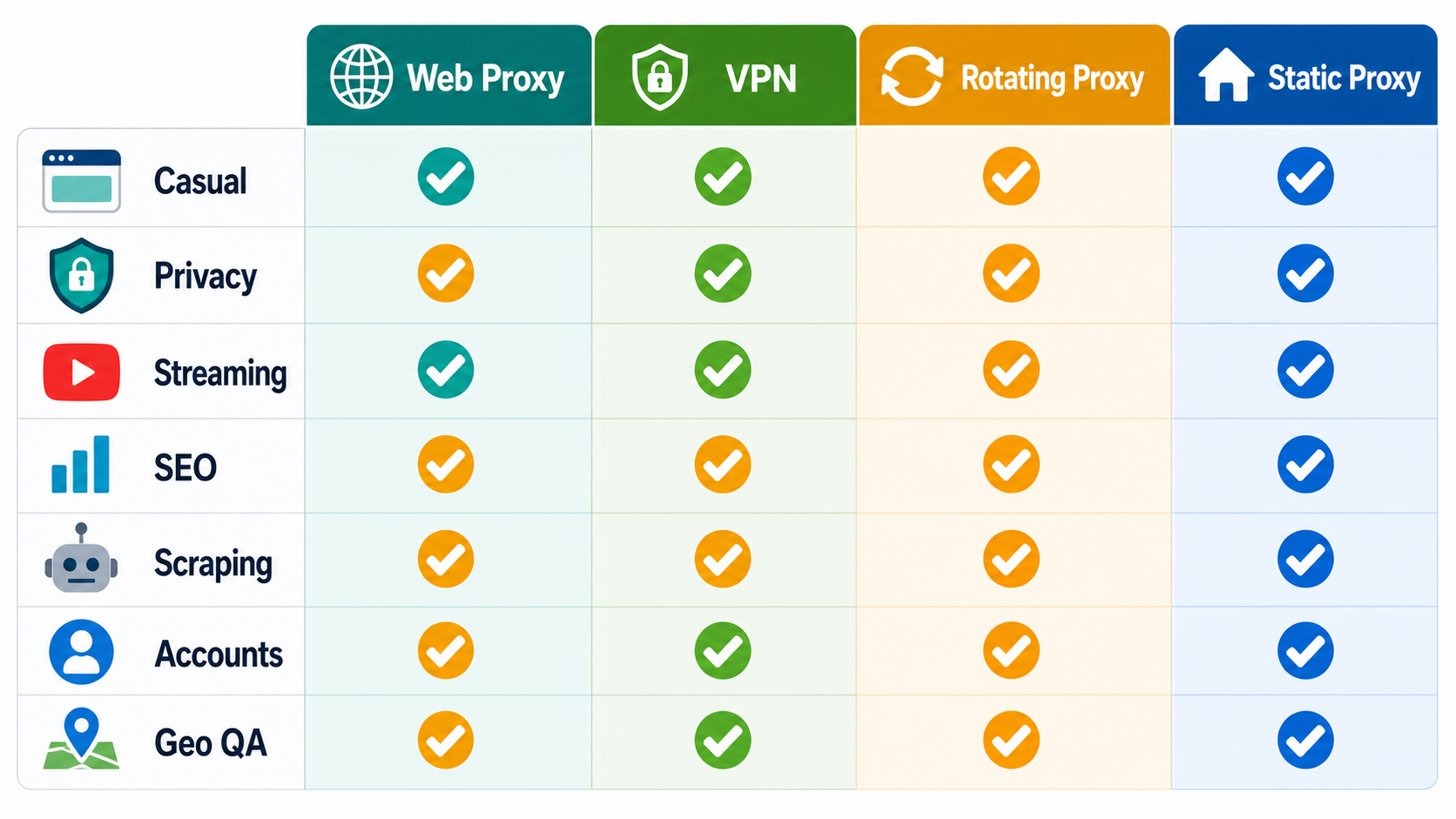
The best BlockAway alternative depends on intent. Casual unblocking, personal privacy, video playback, SEO checks, scraping, account workflows, and geo QA do not need the same tool.
Quick recommendation by intent
| Intent | Best-fit alternative | Why |
|---|---|---|
| Open a blocked public page | Free web proxy | Fast and low setup |
| Private browsing | VPN | Device-level tunnel is more appropriate |
| SEO monitoring or scraping | rotating residential proxies | Better IP diversity and request control |
| Account workflows | Static residential or ISP-style proxy | Stable session identity matters |
| High-throughput checks | datacenter proxies | Fast and cost-efficient when targets tolerate hosting IPs |
Free web proxy alternatives
Free web proxies are closest to BlockAway. They are useful for public pages and one-off access, but they usually share IPs, show ads, and struggle with media, login flows, and JavaScript-heavy sites. The MDN proxy servers and tunneling guide explains the underlying proxy pattern.
VPN alternatives
VPNs are better for personal privacy and whole-device traffic. The FTC public Wi-Fi safety guidance is a useful reminder that HTTPS and account hygiene still matter even when the network path changes.
Rotating proxy alternatives
Use rotating residential proxies for distributed collection, SEO monitoring, localized testing, and workflows where one shared free proxy IP gets blocked too quickly.
Static residential and ISP-style alternatives
Use static residential or ISP-style access when one account, device profile, or QA session needs continuity. For configured client behavior, pair that choice with the SOCKS5 and HTTPS proxy setup guide. This is very different from opening a single public page through BlockAway.
Developer and growth-team alternatives
For automation, pair proxy choice with browser behavior. The Playwright stealth workflow, AI browser automation setup guide, and residential proxy guide help map traffic type to infrastructure.
Where LycheeIP fits
LycheeIP is not a replacement for casual web proxies in every low-risk case. It is for teams that need cleaner IP choices, session control, geographic targeting, and workflow reliability. Start with LycheeIP proxy infrastructure, review the residential proxy guide, compare datacenter proxies, and use the AI-powered browser automation hub when browser behavior is part of the workflow.
Related BlockAway guides
Use these supporting guides to move from one broad BlockAway query into the exact intent you need.
- BlockAway proxy review
- Is BlockAway safe?
- BlockAway vs CroxyProxy
- BlockAway not working
- Free web proxy vs VPN vs rotating proxy
Explore LycheeIP Proxy Infrastructure
Frequently Asked Questions
What is the best BlockAway alternative?
For casual access, another web proxy may be enough. For privacy use a VPN. For automation, SEO, and scraping use managed proxy infrastructure.
Are VPNs better than BlockAway?
For personal privacy and whole-device traffic, yes. For automation and location-controlled workflows, proxies are usually more flexible.
Are rotating proxies better than free web proxies?
For distributed workflows, yes, because they provide IP diversity and control that free shared proxies lack.
Should I create a new page for every BlockAway query?
No. Group pages by intent so the cluster stays useful instead of thin or cannibalized.
Can LycheeIP replace BlockAway?
For casual unblocking, maybe not. For business workflows and reliable proxy routing, yes.