
OpenClaw or Hermes Agent? Here's the answer nobody's giving you.
New users waste money picking the wrong AI agent platform. This isn't about minor feature differences or marketing claims. It's about the real costs, technical tradeoffs, and production readiness that determine whether your web scraping project succeeds or burns through your budget in the first month.
Both OpenClaw and Hermes Agent promise to automate browser-based data collection workflows using AI-powered decision making. But their architectures, pricing models, and ideal use cases differ significantly. Choosing the wrong one means either overpaying for features you won't use or hitting scalability walls that require expensive rewrites.
This comparison breaks down where each agent excels, what the real costs look like at production scale, and which one fits your specific scraping needs.
Feature-by-Feature Breakdown: Where Each Agent Excels
OpenClaw Architecture and Core Capabilities
OpenClaw is an open-source browser automation framework built on top of Playwright and designed for AI-driven web navigation. The core philosophy centers on deterministic control combined with LLM-based decision making.
Key technical features include
OpenClaw excels at complex, multi-step scraping workflows where the target site structure changes frequently or requires human-like interaction patterns. The vision-based approach means it can adapt to layout changes without requiring selector updates.
However, this flexibility comes with tradeoffs. Each decision point requires an LLM call, which adds latency and cost. For simple, high-volume scraping where selectors are stable, this overhead becomes expensive.
- Browser Control: Built on Playwright, supporting Chromium, Firefox, and WebKit
- Vision-based Navigation: Uses screenshot analysis and DOM inspection to make navigation decisions
- Action Primitives: Click, type, scroll, wait, and extract operations with retry logic
- State Management: Maintains context across multi-step workflows
- Local Execution: Runs entirely on your infrastructure
- Custom Model Support: Works with OpenAI, Anthropic, or locally hosted LLMs
Hermes Agent Architecture and Core Capabilities
Hermes Agent takes a different approach, focusing on speed and cost efficiency for production scraping workflows. It combines traditional selector-based extraction with AI-powered fallback logic.
Key technical features include
Hermes Agent is optimized for teams that need reliable, cost-effective scraping at scale. The hybrid approach means you get the speed of traditional scraping with AI as a safety net, not the primary mechanism.
The tradeoff is reduced flexibility. For highly dynamic sites or workflows that require genuine reasoning, Hermes Agent may struggle where OpenClaw would adapt more naturally.
- Hybrid Extraction: Primary selectors with AI fallback when structure changes
- Headless-First Design: Optimized for headless Chrome with minimal rendering overhead
- Built-in Retry Logic: Automatic error handling and rate limit management
- Session Persistence: Maintains cookies and authentication across requests
- API-First Interface: RESTful API for easy integration
- Managed Hosting Option: Cloud-based execution with usage-based billing
Browser Handling and Anti-Detection
Both platforms handle browser fingerprinting and anti-bot detection differently.
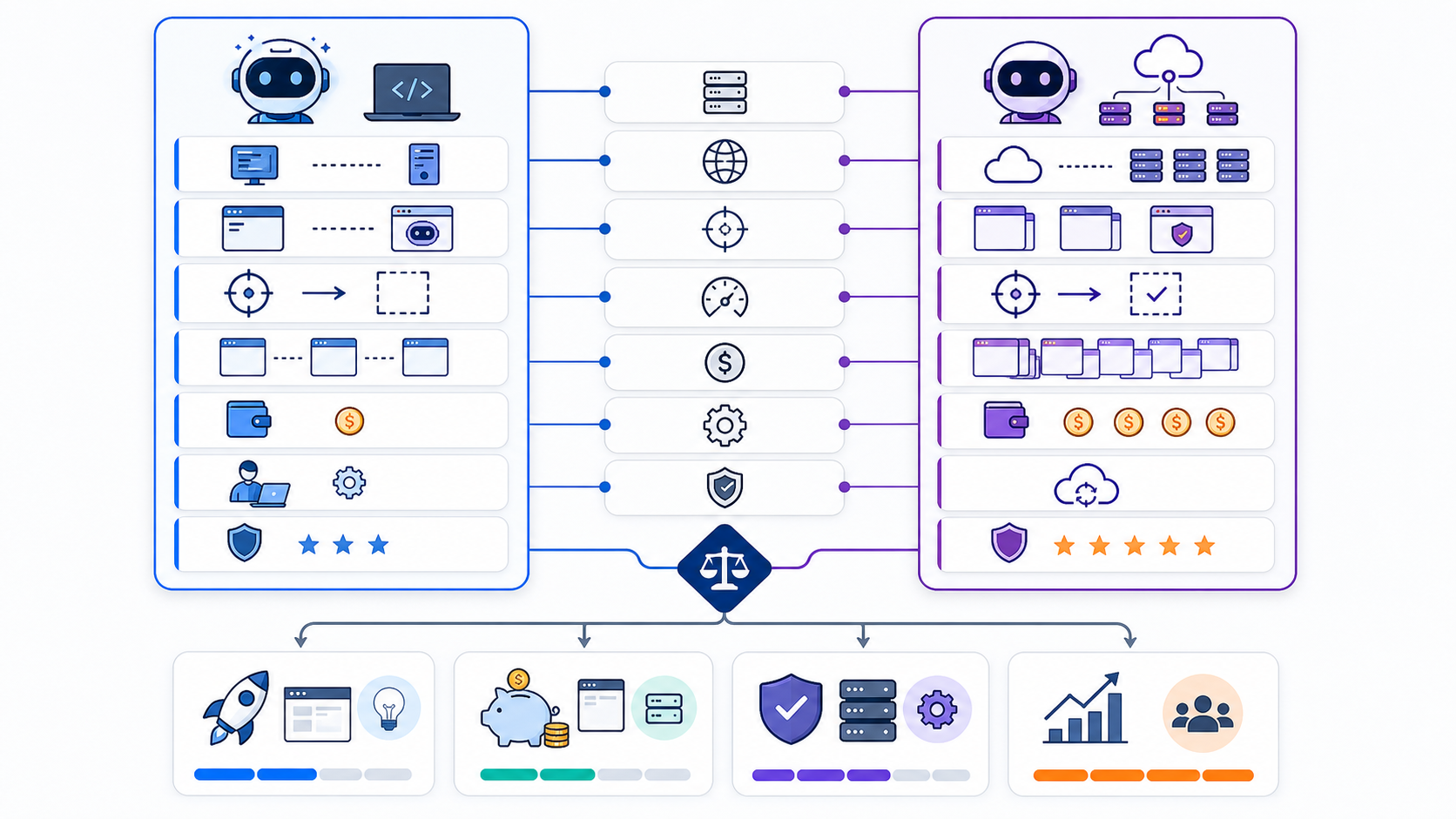
OpenClaw provides
- Manual fingerprint configuration
- No built-in stealth plugins
- Requires custom implementation of anti-detection techniques
- Full control over browser initialization parameters
Hermes Agent includes
For teams without deep browser automation experience, Hermes Agent's built-in anti-detection features reduce setup time. For teams that need precise control or have custom stealth requirements, OpenClaw's flexibility is valuable.
Both platforms benefit significantly from proper proxy infrastructure. Using residential or ISP proxies helps avoid IP-based blocking regardless of which agent you choose.
- Pre-configured stealth profiles
- Automatic user agent rotation
- Canvas fingerprint randomization
- WebRTC leak protection
Data Extraction Accuracy
OpenClaw's vision-based approach can identify data even when HTML structure is inconsistent. It analyzes visual layout and semantic context, making it effective for:
Hermes Agent's selector-first approach offers:
In practice, OpenClaw achieves roughly 85-92% accuracy on variable-structure sites without selector updates. Hermes Agent achieves 95-98% accuracy on stable sites but drops to 70-80% when structure changes significantly before fallback logic engages.
- Sites with frequent design changes
- Content embedded in JavaScript-rendered components
- Data without stable CSS selectors
- Workflows requiring visual validation
- Faster extraction when selectors are stable
- More predictable CPU and memory usage
- Lower per-request costs
- Better performance at high concurrency
Scaling and Concurrency
OpenClaw runs as a local process, meaning scaling requires horizontal infrastructure management:
This gives complete control but requires DevOps expertise. For teams already running Kubernetes or similar orchestration, this integrates naturally. For smaller teams, it's additional complexity.
Hermes Agent offers both self-hosted and managed options:
For production workloads exceeding 100,000 requests per day, self-hosted options typically become more cost-effective. Below that threshold, managed services often cost less when infrastructure overhead is included.
- Deploy multiple instances across servers
- Implement your own job queue
- Handle browser instance lifecycle
- Monitor resource usage and crashes
- Self-hosted scales similarly to OpenClaw
- Managed version handles scaling automatically
- Built-in job queuing and rate limiting
- Per-request pricing eliminates infrastructure management
Pricing Comparison and Hidden Costs for Production Use
OpenClaw Cost Structure
OpenClaw is open-source and free to use, but production costs include:
Infrastructure Costs
- Server instances: $50-200 per month per worker (depending on provider and specs)
- Each instance handles roughly 20-50 concurrent browser sessions
- Memory requirements: 2-4 GB per browser instance
- CPU requirements: 2-4 cores per worker for smooth operation
LLM API Costs
- OpenAI GPT-4 Vision: $0.01-0.03 per decision point
- Anthropic Claude 3: $0.008-0.024 per decision point
- Typical workflow with 5-10 decision points: $0.05-0.30 per scrape
- High-volume workflows can hit $500-3000 per month in API costs
Proxy Costs
- residential proxies: $7-15 per GB
- Typical page load: 1-3 MB
- 100,000 scrapes = 100-300 GB = $700-4500 per month
- datacenter proxies reduce this to $50-200 per month but may face more blocking
Engineering Costs
Total Monthly Cost (100,000 scrapes):
- Initial setup: 40-80 hours
- Ongoing maintenance: 10-20 hours per month
- Custom anti-detection implementation: 20-40 hours
- At $100-150 per hour, this is $6,000-12,000 initial and $1,000-3,000 monthly
- Infrastructure: $200-800
- LLM APIs: $500-3,000
- Proxies: $700-4,500
- Engineering (amortized): $1,500-3,500
- Total: $2,900-11,800 per month
Hermes Agent Cost Structure
Self-Hosted Option
- Server instances: $50-200 per month per worker
- Each instance handles 50-100 concurrent sessions (more efficient than OpenClaw)
- LLM API calls only on fallback: $50-300 per month for typical workloads
- Proxy costs: same as OpenClaw
- Engineering: 20-40 hours initial setup, 5-10 hours monthly maintenance
Managed Option
Total Monthly Cost (100,000 scrapes):
- Per-request pricing: $0.002-0.008 per scrape depending on complexity
- Includes infrastructure and basic proxies
- No engineering overhead for scaling
- Premium proxy upgrades available
Self-hosted
- Infrastructure: $150-600
- LLM APIs: $50-300
- Proxies: $700-4,500
- Engineering (amortized): $500-1,500
- Total: $1,400-6,900 per month
Managed
- Per-request fees: $200-800
- Premium proxies: $300-1,500 (optional)
- Engineering: minimal
- Total: $200-2,300 per month
Hidden Costs and Considerations
Beyond base pricing, several hidden costs affect total cost of ownership:
Failure Handling
- OpenClaw requires custom retry logic and dead letter queue implementation
- Failed scrapes still consume LLM API credits
- Hermes Agent includes automatic retries in managed pricing
Monitoring and Debugging
- OpenClaw needs custom instrumentation for production observability
- Tools like Datadog or New Relic add $50-500 per month
- Hermes Agent managed includes basic monitoring dashboard
IP Rotation Complexity
- Both platforms require proxy integration
- OpenClaw needs manual proxy pool management
- Hermes Agent self-hosted needs similar implementation
- Hermes Agent managed handles rotation automatically
Model Switching Costs
- OpenClaw allows switching between LLM providers easily
- Hermes Agent uses proprietary prompting that may not transfer if switching platforms
- Lock-in risk is higher with Hermes Agent managed option
Cost Breakeven Analysis
For most technical teams
- Below 50,000 scrapes per month: Hermes Agent managed is most cost-effective
- 50,000-200,000 scrapes per month: Hermes Agent self-hosted or OpenClaw break even depending on engineering costs
- Above 200,000 scrapes per month: OpenClaw or Hermes Agent self-hosted with optimized infrastructure become cheaper
The exact breakeven point depends heavily on
- Engineering hourly rates
- LLM model choice
- Proxy tier required
- Target site complexity
- Acceptable failure rates
Setup Tutorials and Which One Fits Your Specific Scraping Needs
OpenClaw Setup and Configuration
Basic OpenClaw implementation for a product scraping workflow:
Installation
npm install @openclaw/core @openclaw/playwrightBasic Configuration
- Set up Playwright browser context
- Configure LLM provider API keys
- Define action primitives for your workflow
- Implement data extraction schema
- Add retry and error handling logic
Proxy Integration
OpenClaw requires manual proxy configuration in the Playwright browser context. This means implementing connection logic, handling proxy rotation, and managing authentication.
For teams using residential or rotating proxies, this requires additional code to:
- Fetch proxy credentials from your provider
- Rotate proxies on failure or after N requests
- Handle proxy authentication errors
- Monitor proxy health and performance
Production Checklist
Total setup time for experienced teams: 40-80 hours.
- Implement distributed job queue (Bull, RabbitMQ, or similar)
- Set up Docker containers for worker instances
- Configure auto-scaling based on queue depth
- Add monitoring for browser crashes and memory leaks
- Implement graceful shutdown handling
- Set up log aggregation
Hermes Agent Setup and Configuration
Self-Hosted Setup
pip install hermes-agentConfiguration
- Define target URLs and data schemas
- Set primary CSS selectors
- Configure AI fallback thresholds
- Add proxy credentials
- Set rate limits and concurrency
Managed Setup
Managed setup takes 2-4 hours. Self-hosted setup takes 20-40 hours including proxy integration and production hardening.
- Sign up for API access
- Define scraping templates via dashboard
- Set scheduling or trigger via webhook
- Configure output format and destination
Use Case Recommendations
Choose OpenClaw if
- Your target sites change HTML structure frequently
- You need genuine AI reasoning for navigation decisions
- You're scraping sites with complex interaction requirements (multi-step forms, conditional navigation)
- You have engineering resources for custom infrastructure
- You need maximum flexibility in LLM provider choice
- You're comfortable with higher per-request costs for better adaptability
- Your workflows require visual validation or screenshot analysis
Choose Hermes Agent if
- You're scraping sites with relatively stable structures
- Cost per request is a primary concern
- You need to scale to high volumes quickly
- You prefer managed infrastructure over custom deployment
- Your team lacks deep browser automation experience
- Speed and consistency matter more than maximum flexibility
- You want built-in anti-detection features without custom implementation
Specific Workflow Examples
E-commerce Price Monitoring
Hermes Agent is typically better. Product pages have stable structures, volume is high, and speed matters. The hybrid approach handles occasional layout changes while keeping costs low.
Job Board Aggregation
OpenClaw works well here. Job boards often have varying structures, require navigation through search results, and benefit from AI-based content identification.
Real Estate Listing Collection
Depends on target sites. For major platforms with stable APIs or structures, Hermes Agent. For smaller regional sites with custom layouts, OpenClaw.
News Article Extraction
Hermes Agent for high-volume monitoring of known sources. OpenClaw for discovering and adapting to new sources automatically.
Social Media Data Collection
OpenClaw generally better due to dynamic content loading, anti-bot measures requiring human-like behavior, and frequently changing layouts.
How Proxy Infrastructure Integrates with AI Agent Workflows
Regardless of which AI agent platform you choose, proxy infrastructure determines whether your scraping succeeds or gets blocked.
Explore LycheeIP Proxy Infrastructure
Proxy Type Selection for AI Agents
Both OpenClaw and Hermes Agent benefit from proper proxy configuration, but requirements differ based on your workflow:
Residential Proxies
- Best for AI agents scraping sites with strong anti-bot protection
- Appear as real user traffic from genuine ISP connections
- Higher cost but lower block rates
- Essential for social media, e-commerce, and travel sites
- Recommended when LLM API costs are already high and you can't afford scrape failures
Datacenter Proxies
- Faster and cheaper than residential options
- Work well for public data sites with lighter protection
- Higher risk of blocks on protected sites
- Good choice when scraping high volumes of less-protected content
- Cost savings can offset occasional failures
Static Residential Proxies
- Blend residential legitimacy with datacenter stability
- Same IP persists across sessions, useful for maintaining login state
- Lower cost than rotating residential proxies
- Ideal for workflows requiring session persistence
- Work well with both OpenClaw and Hermes Agent for authenticated scraping
Proxy Rotation Strategy
AI agents require different rotation strategies than traditional scrapers:
Per-Session Rotation
Useful when each scraping job is independent. Both OpenClaw and Hermes Agent can initialize new browser contexts with fresh proxy assignments.
Per-Request Rotation
Less common with browser-based agents since maintaining browser state across proxy changes is complex. Better suited for API-based scraping.
Failure-Based Rotation
Rotate only when encountering blocks or errors. Reduces proxy consumption while maintaining success rates. Both platforms can implement this with custom logic.
Proxy Provider Integration
When evaluating proxy providers for AI agent workflows, consider:
Providers like LycheeIP offer proxy infrastructure designed for web scraping and automation workflows, with support for residential, datacenter, and static residential options. When selecting proxy infrastructure for AI agent projects, evaluate how the proxy provider integrates with your chosen agent platform and whether they support the authentication methods and rotation strategies your workflow requires.
- Authentication Method: Username/password vs IP whitelist. Browser agents prefer username/password for easier rotation.
- Concurrent Connection Limits: AI agents often run multiple browser instances. Ensure your proxy plan supports required concurrency.
- Geographic Distribution: Match proxy locations to target site audience for better success rates.
- Session Duration: Longer sessions reduce connection overhead for multi-page scraping workflows.
- Bandwidth Allocation: AI agents load full pages with images and scripts. Plan for higher bandwidth consumption than API scraping.
Common Mistakes When Selecting AI Agents for Scraping Projects
Overestimating AI Capabilities
The biggest mistake is assuming AI agents eliminate the need for scraping expertise. Both OpenClaw and Hermes Agent still require:
AI improves adaptability but doesn't eliminate the need for solid engineering fundamentals.
- Understanding target site structure
- Configuring appropriate wait times and retry logic
- Handling authentication and session management
- Monitoring for layout changes and errors
Underestimating Production Complexity
Proof-of-concept demos often hide production challenges:
Both platforms require production hardening beyond basic setup.
- What happens when target sites rate limit your requests?
- How do you handle partial failures in multi-step workflows?
- Who monitors for data quality issues?
- How do you manage cost spikes when scrape volumes increase?
Ignoring Cost Scaling
Early-stage projects often choose based on ease of setup rather than cost at scale. A platform that costs $200 per month at 10,000 scrapes might cost $5,000 at 100,000 scrapes.
Run cost projections at 10x and 100x your initial volume before committing to a platform.
Wrong Proxy Tier Selection
Using datacenter proxies to save money, then facing 80% block rates, ultimately costs more than using residential proxies from the start. Similarly, over-provisioning with premium residential proxies when datacenter would work wastes budget.
Test your specific targets with different proxy tiers before scaling.
Neglecting Compliance and Terms of Service
AI agents make scraping easier, but that doesn't change legal and ethical obligations:
Both OpenClaw and Hermes Agent are tools. Responsible use is the user's responsibility.
- Review target site terms of service
- Check robots.txt files for guidance
- Implement rate limiting to avoid overloading target servers
- Respect do-not-scrape signals
- Use scraped data only for legitimate purposes like research, monitoring, price comparison, and public data collection
Lack of Fallback Strategy
Relying entirely on one AI agent platform creates risk. What happens if:
Maintain the ability to switch platforms or fall back to traditional scraping if needed. Don't architect your entire data pipeline around a single agent's specific API.
- The platform changes pricing significantly?
- A critical bug affects your production workflow?
- The underlying LLM API experiences downtime?
Conclusion
OpenClaw and Hermes Agent serve different scraping needs. OpenClaw offers maximum flexibility and AI-powered adaptability at higher cost and complexity. Hermes Agent provides production-ready efficiency and cost optimization with less flexibility.
For technical teams evaluating these platforms
No single platform is universally better. The right choice depends on your workflow complexity, scale, budget, and team capabilities. Most importantly, both platforms require proper proxy infrastructure and responsible scraping practices to succeed in production.
For teams building web scraping workflows, the agent platform is only one piece of the infrastructure puzzle. Proxy selection, rate limiting, error handling, and data validation all contribute equally to success. Choose your AI agent based on your specific requirements, not on marketing claims or shallow feature comparisons.
- Start with your specific use case and target site characteristics
- Calculate real costs at your expected scale, including infrastructure and engineering time
- Consider your team's expertise and available DevOps resources
- Test both platforms against your actual targets before committing
- Plan for proxy infrastructure that matches your blocking risk and budget
Related LycheeIP Guides and Resources
- <a href="https://www.lycheeip.com/en/home/ip">LycheeIP proxy infrastructure</a>
- <a href="https://www.lycheeip.com/en/ip/static">static residential proxies</a>
- <a href="https://www.lycheeip.com/en/ip/dynamic">rotating residential proxies</a>
- <a href="https://www.lycheeip.com/en/ip/datacenter">datacenter proxies</a>
- <a href="https://www.lycheeip.com/en/document/residential-proxy-what-it-is-how-it-works-and-when-to-use-it/607">Residential proxy guide</a>
- <a href="https://www.lycheeip.com/en/document/anonymous-proxy-server-how-it-works-types-and-when-to-use-one/608">Anonymous proxy server guide</a>
- <a href="https://www.lycheeip.com/en/document/vpn-privacy-what-actually-gets-logged/643">VPN privacy logging reality</a>
- <a href="https://www.lycheeip.com/en/document/scale-lead-scraping-to-100k-with-n8n/638">Scale lead scraping to 100K+ with n8n</a>
Reference background: <a href="https://developer.mozilla.org/en-US/docs/Web/API">MDN Web APIs documentation</a>, <a href="https://owasp.org/www-project-automated-threats-to-web-applications/">OWASP automated threats guidance</a>, <a href="https://www.rfc-editor.org/rfc/rfc9110">IETF HTTP semantics</a>, <a href="https://playwright.dev/docs/intro">Playwright documentation</a>.
Frequently Asked Questions
Can I use OpenClaw and Hermes Agent without proxies?
Technically yes, but not recommended for production. Scraping without proxies exposes your server IPs to blocking and makes you easily identifiable. Even light scraping benefits from proxy infrastructure. For high-volume or protected sites, proxies are essential regardless of which AI agent you use.
Which platform handles CAPTCHAs better?
Neither platform solves CAPTCHAs automatically. Both can integrate with third-party CAPTCHA solving services like 2Captcha or Anti-Captcha. OpenClaw gives you more control over the integration logic, while Hermes Agent managed may offer built-in integrations depending on your plan. Your best defense against CAPTCHAs is using quality residential proxies and implementing human-like browsing behavior.
How do I choose between self-hosted and managed Hermes Agent?
Choose managed if you're scraping under 100,000 pages per month, lack DevOps expertise, or want faster time-to-production. Choose self-hosted if you're exceeding that volume, have engineering resources for infrastructure management, need custom configurations, or want to minimize per-request costs at scale.
Can I switch from one platform to another later?
Yes, but expect significant rework. Neither platform offers direct migration tools. You'll need to rewrite workflow definitions, reconfigure authentication and extraction logic, and retest everything. Plan for 40-60% of the original implementation time. This is why thorough evaluation before choosing matters.
Which platform is faster for the same scraping task?
Hermes Agent is typically faster for straightforward scraping because it uses selector-based extraction first and only falls back to AI when needed. OpenClaw makes LLM calls for most decision points, adding latency. However, OpenClaw may complete complex workflows faster by making better navigation decisions on the first try.
Do these platforms work for mobile app scraping?
Not directly. Both are designed for browser-based web scraping. For mobile app data collection, you need different tools like Appium or API interception. However, you can use these agents to scrape mobile web versions of sites by configuring appropriate user agents and viewport settings.
How do I know if my target site will block AI agent scraping?
Test carefully at low volume first. Sites with strong anti-bot protection (Cloudflare, PerimeterX, Akamai) will challenge any automated access. Using residential proxies, implementing proper rate limiting, and mimicking human behavior helps. Both platforms can work on protected sites, but success depends more on your proxy quality and scraping practices than the agent platform itself.
What happens to my scraped data if I use Hermes Agent managed?
Hermes Agent managed typically processes data and delivers it to your specified output destination (S3, database, webhook) without long-term storage on their infrastructure. Review their data retention policies and ensure they meet your privacy and compliance requirements. For sensitive data, self-hosted options give you complete control.
Can I use local LLMs with these platforms to reduce API costs?
OpenClaw supports custom LLM providers, so you can use locally hosted models like Llama or Mistral. This requires additional infrastructure but can reduce API costs significantly at high volume. Hermes Agent uses proprietary prompting optimized for specific models, making local LLM integration more difficult in both self-hosted and managed versions.
How do I monitor AI agent scraping jobs in production?
Implement logging for all scraping attempts, including successes, failures, proxy performance, and data quality metrics. OpenClaw requires custom monitoring implementation using tools like Prometheus, Grafana, or cloud provider monitoring. Hermes Agent managed includes basic dashboards, but you'll still want custom alerting for business-critical metrics. Track cost per successful scrape, block rates, and data completeness as key performance indicators.