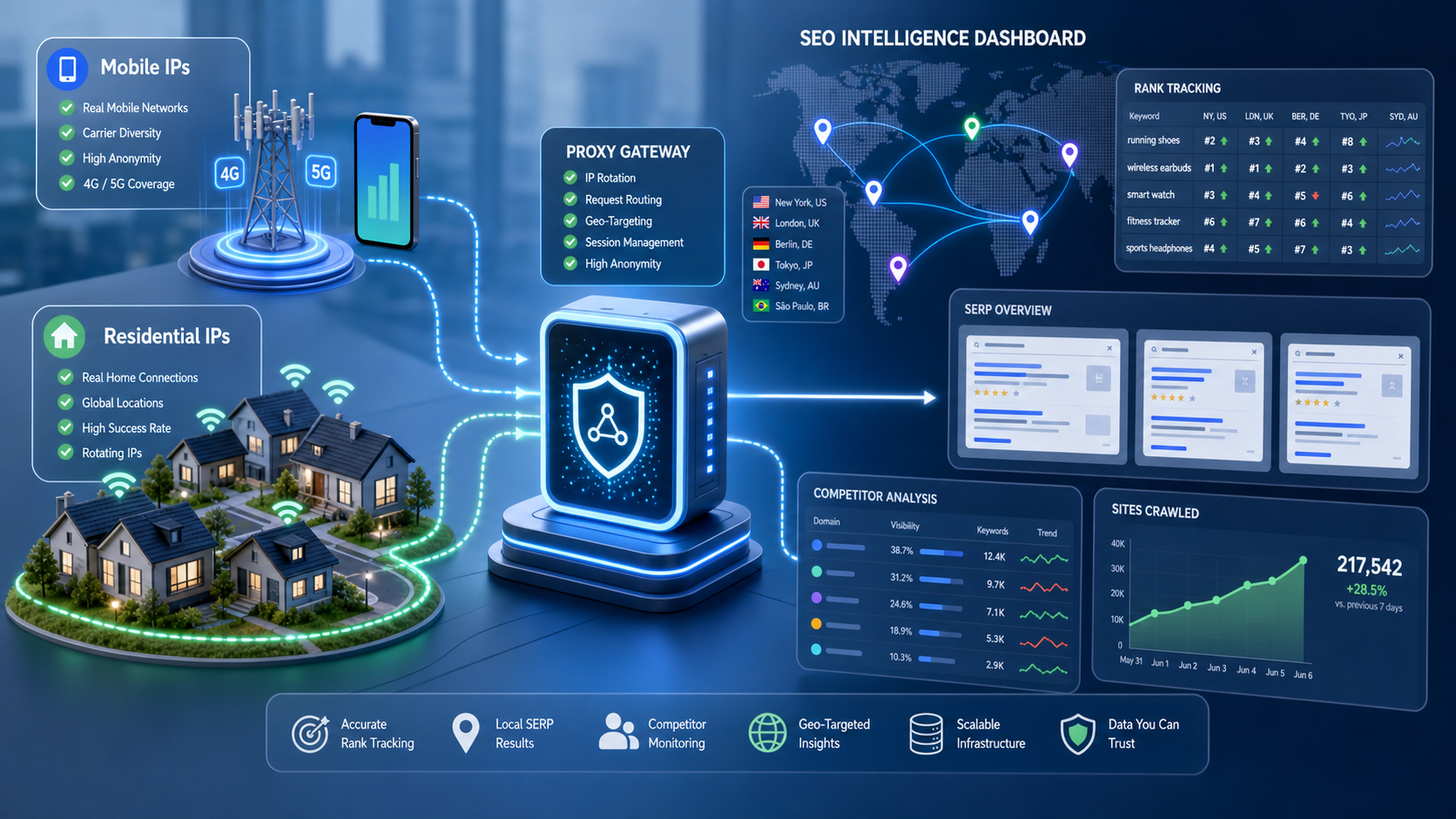
Mobile and residential proxies help SEO teams collect more accurate local search data, reduce detection risk, and test how search and ads appear across regions and devices.
SEO proxy work is not just about scraping more pages. It is about collecting cleaner data from the right location, device profile, and network type while respecting target-site rules.
A good proxy setup should connect the use case to the right infrastructure: proxy infrastructure, rotating residential proxies, static residential proxies, and datacenter proxies all solve different problems. This article explains the practical decisions behind mobile and residential proxies for SEO.
For technical and compliance context, review robots.txt guidance, the SOCKS5 specification, and common forwarding-header behavior such as X-Forwarded-For reference before scaling any proxy workflow.
What Are SEO Proxies and Why Do They Matter?
For SEO workflows, proxies are most useful when location, personalization, or rate limits affect the data being collected. The proxy type should match the task: mobile for mobile SERPs, residential for lower detection risk, and datacenter for faster low-risk collection.
How Mobile Proxies Improve Geo-Targeting and Search Accuracy for Regional SEO Tasks
For SEO workflows, proxies are most useful when location, personalization, or rate limits affect the data being collected. The proxy type should match the task: mobile for mobile SERPs, residential for lower detection risk, and datacenter for faster low-risk collection.
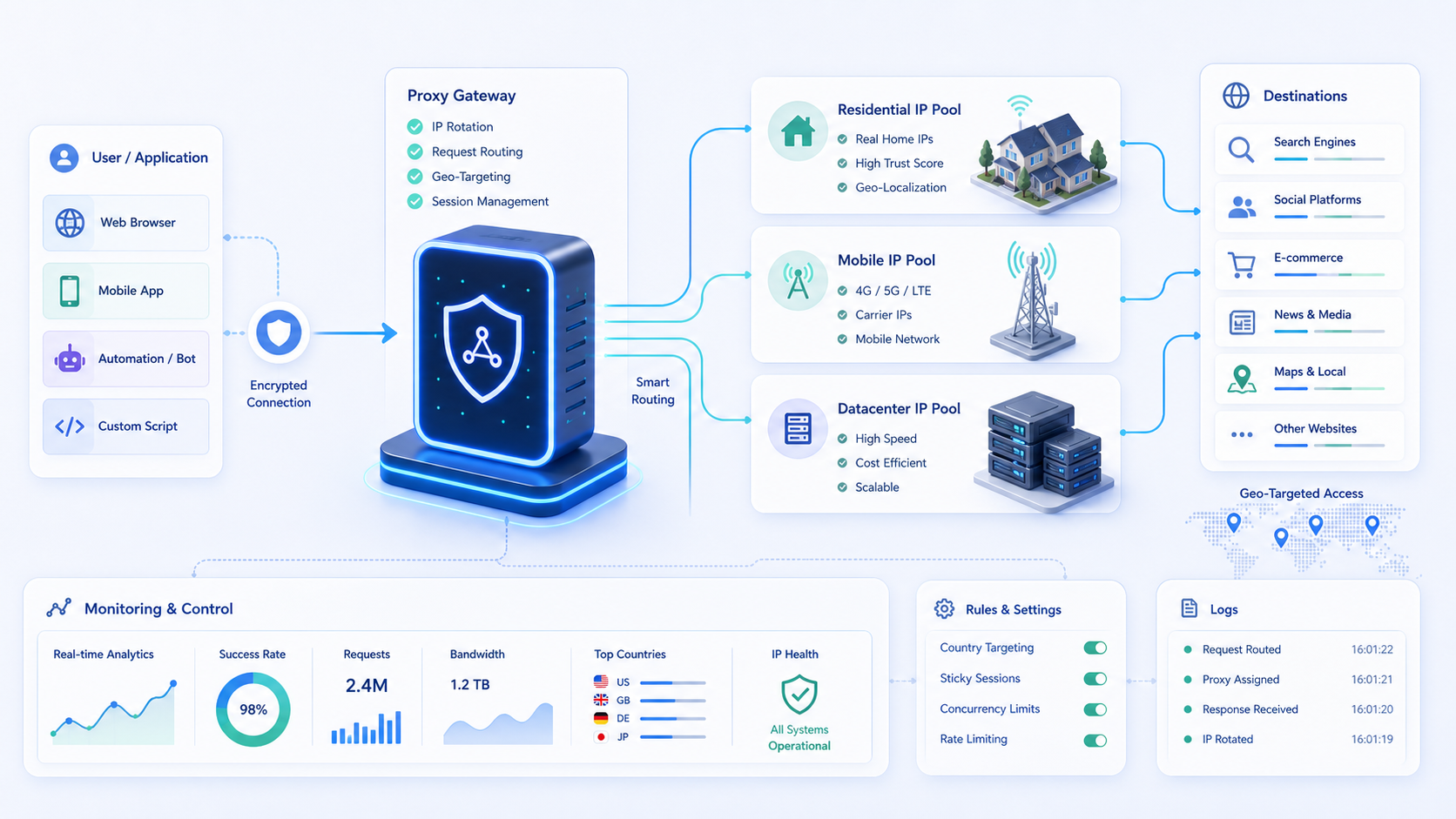
Localized Rank Tracking
Localized Rank Tracking matters because proxy performance is not only about changing an IP address. It is about matching network identity, location, session behavior, reliability, and compliance to the real workflow.
Testing Mobile Search Results
Testing Mobile Search Results matters because proxy performance is not only about changing an IP address. It is about matching network identity, location, session behavior, reliability, and compliance to the real workflow.
International SEO Campaigns
For SEO workflows, proxies are most useful when location, personalization, or rate limits affect the data being collected. The proxy type should match the task: mobile for mobile SERPs, residential for lower detection risk, and datacenter for faster low-risk collection.
When to Use Mobile Proxies
When to Use Mobile Proxies matters because proxy performance is not only about changing an IP address. It is about matching network identity, location, session behavior, reliability, and compliance to the real workflow.
Understanding the Benefits of Using Residential Proxies for Minimizing Detection Risk During Competitor Analysis
rotating residential proxies use ISP-associated addresses and are useful when a workflow needs a more natural network profile, broader geo coverage, or lower block rates than typical hosting IPs.
Competitor Rank Monitoring
Competitor Rank Monitoring matters because proxy performance is not only about changing an IP address. It is about matching network identity, location, session behavior, reliability, and compliance to the real workflow.
SERP Scraping at Scale
A stable workflow combines proxy infrastructure, retry logic, monitoring, rate limiting, and clean separation between experiments, production jobs, and client-specific traffic.
Ad Verification and Competitor Ad Analysis
Ad Verification and Competitor Ad Analysis matters because proxy performance is not only about changing an IP address. It is about matching network identity, location, session behavior, reliability, and compliance to the real workflow.
Multi-Account Management for SEO Tools
For SEO workflows, proxies are most useful when location, personalization, or rate limits affect the data being collected. The proxy type should match the task: mobile for mobile SERPs, residential for lower detection risk, and datacenter for faster low-risk collection.
When to Use Residential Proxies
rotating residential proxies use ISP-associated addresses and are useful when a workflow needs a more natural network profile, broader geo coverage, or lower block rates than typical hosting IPs.
Comparing Proxy Types for SEO: Datacenter, Residential, and Mobile
For SEO workflows, proxies are most useful when location, personalization, or rate limits affect the data being collected. The proxy type should match the task: mobile for mobile SERPs, residential for lower detection risk, and datacenter for faster low-risk collection.
| Proxy type | Best SEO use | Tradeoff |
|---|---|---|
| Datacenter | Fast rank checks and low-risk scraping | Higher detection risk |
| Residential | Competitor monitoring and SERP collection | Higher bandwidth cost |
| Mobile | Mobile SERPs and carrier-level geo testing | Premium cost and variable latency |
Residential Proxies
rotating residential proxies use ISP-associated addresses and are useful when a workflow needs a more natural network profile, broader geo coverage, or lower block rates than typical hosting IPs.
Mobile Proxies
Mobile Proxies matters because proxy performance is not only about changing an IP address. It is about matching network identity, location, session behavior, reliability, and compliance to the real workflow.
What is a Proxy Server?
Real-World Applications and Scenarios Where These Proxies Enhance SEO Performance
For SEO workflows, proxies are most useful when location, personalization, or rate limits affect the data being collected. The proxy type should match the task: mobile for mobile SERPs, residential for lower detection risk, and datacenter for faster low-risk collection.
Scenario 1: Agency Managing Local SEO for Multi-Location Clients
For SEO workflows, proxies are most useful when location, personalization, or rate limits affect the data being collected. The proxy type should match the task: mobile for mobile SERPs, residential for lower detection risk, and datacenter for faster low-risk collection.
Scenario 2: E-commerce Brand Monitoring Competitor Pricing and Ad Copy
Cost should be evaluated against success rate, bandwidth, support, and operational risk. The cheapest proxy pool can become expensive if it produces blocks, bad data, or repeated manual cleanup.
Scenario 3: SaaS Company Running International SEO Campaigns
For SEO workflows, proxies are most useful when location, personalization, or rate limits affect the data being collected. The proxy type should match the task: mobile for mobile SERPs, residential for lower detection risk, and datacenter for faster low-risk collection.
Scenario 4: Affiliate Marketer Testing Geo-Targeted Content
Scenario 4: Affiliate Marketer Testing Geo-Targeted Content matters because proxy performance is not only about changing an IP address. It is about matching network identity, location, session behavior, reliability, and compliance to the real workflow.
Scenario 5: SEO Tool Provider Scraping SERPs for Keyword Database
For SEO workflows, proxies are most useful when location, personalization, or rate limits affect the data being collected. The proxy type should match the task: mobile for mobile SERPs, residential for lower detection risk, and datacenter for faster low-risk collection.
How to Choose the Right Proxy Type for Your SEO Workflow
For SEO workflows, proxies are most useful when location, personalization, or rate limits affect the data being collected. The proxy type should match the task: mobile for mobile SERPs, residential for lower detection risk, and datacenter for faster low-risk collection.
Evaluate Detection Risk
Evaluate Detection Risk matters because proxy performance is not only about changing an IP address. It is about matching network identity, location, session behavior, reliability, and compliance to the real workflow.
Consider Geo-Targeting Needs
Consider Geo-Targeting Needs matters because proxy performance is not only about changing an IP address. It is about matching network identity, location, session behavior, reliability, and compliance to the real workflow.
Balance Speed and Cost
Cost should be evaluated against success rate, bandwidth, support, and operational risk. The cheapest proxy pool can become expensive if it produces blocks, bad data, or repeated manual cleanup.
Test and Monitor Performance
Test and Monitor Performance matters because proxy performance is not only about changing an IP address. It is about matching network identity, location, session behavior, reliability, and compliance to the real workflow.
Explore LycheeIP SEO Proxy Options
Common Mistakes to Avoid When Using Proxies for SEO
For SEO workflows, proxies are most useful when location, personalization, or rate limits affect the data being collected. The proxy type should match the task: mobile for mobile SERPs, residential for lower detection risk, and datacenter for faster low-risk collection.
Using the Same IP for Too Many Requests
Using the Same IP for Too Many Requests matters because proxy performance is not only about changing an IP address. It is about matching network identity, location, session behavior, reliability, and compliance to the real workflow.
Ignoring Target Site Terms of Service
Proxy usage should stay within applicable law, platform terms, and crawler rules. Review robots.txt guidance, avoid private data, and keep request rates respectful.
Choosing the Wrong Proxy Type for the Task
Choosing the Wrong Proxy Type for the Task matters because proxy performance is not only about changing an IP address. It is about matching network identity, location, session behavior, reliability, and compliance to the real workflow.
Not Monitoring Proxy Performance
Not Monitoring Proxy Performance matters because proxy performance is not only about changing an IP address. It is about matching network identity, location, session behavior, reliability, and compliance to the real workflow.
Skipping Retry and Error Handling Logic
Skipping Retry and Error Handling Logic matters because proxy performance is not only about changing an IP address. It is about matching network identity, location, session behavior, reliability, and compliance to the real workflow.
Evaluating Proxy Providers for SEO Workflows
For SEO workflows, proxies are most useful when location, personalization, or rate limits affect the data being collected. The proxy type should match the task: mobile for mobile SERPs, residential for lower detection risk, and datacenter for faster low-risk collection.
Proxy Type Availability
Proxy Type Availability matters because proxy performance is not only about changing an IP address. It is about matching network identity, location, session behavior, reliability, and compliance to the real workflow.
Geographic Coverage
Geographic Coverage matters because proxy performance is not only about changing an IP address. It is about matching network identity, location, session behavior, reliability, and compliance to the real workflow.
IP Pool Size and Quality
IP Pool Size and Quality matters because proxy performance is not only about changing an IP address. It is about matching network identity, location, session behavior, reliability, and compliance to the real workflow.
Rotation and Session Control
Rotation helps distribute requests and reduce repeated pressure on one IP. Use it deliberately: rotate for collection workflows, but avoid unnecessary rotation when session continuity matters.
Integration and Documentation
Integration and Documentation matters because proxy performance is not only about changing an IP address. It is about matching network identity, location, session behavior, reliability, and compliance to the real workflow.
Acceptable-Use Policies
Acceptable-Use Policies matters because proxy performance is not only about changing an IP address. It is about matching network identity, location, session behavior, reliability, and compliance to the real workflow.
Testing and Trial Options
Testing and Trial Options matters because proxy performance is not only about changing an IP address. It is about matching network identity, location, session behavior, reliability, and compliance to the real workflow.
Where LycheeIP Fits for SEO Workflows
For SEO workflows, proxies are most useful when location, personalization, or rate limits affect the data being collected. The proxy type should match the task: mobile for mobile SERPs, residential for lower detection risk, and datacenter for faster low-risk collection.
Building a Scalable SEO Proxy Workflow
For SEO workflows, proxies are most useful when location, personalization, or rate limits affect the data being collected. The proxy type should match the task: mobile for mobile SERPs, residential for lower detection risk, and datacenter for faster low-risk collection.
Automate Proxy Rotation
Rotation helps distribute requests and reduce repeated pressure on one IP. Use it deliberately: rotate for collection workflows, but avoid unnecessary rotation when session continuity matters.
Monitor Success Rates
Monitor Success Rates matters because proxy performance is not only about changing an IP address. It is about matching network identity, location, session behavior, reliability, and compliance to the real workflow.
Implement Retry Logic
Implement Retry Logic matters because proxy performance is not only about changing an IP address. It is about matching network identity, location, session behavior, reliability, and compliance to the real workflow.
Schedule Queries Strategically
Schedule Queries Strategically matters because proxy performance is not only about changing an IP address. It is about matching network identity, location, session behavior, reliability, and compliance to the real workflow.
Separate Workflows by Proxy Type
A stable workflow combines proxy infrastructure, retry logic, monitoring, rate limiting, and clean separation between experiments, production jobs, and client-specific traffic.
Ethical and Legal Considerations for Using Proxies in SEO
For SEO workflows, proxies are most useful when location, personalization, or rate limits affect the data being collected. The proxy type should match the task: mobile for mobile SERPs, residential for lower detection risk, and datacenter for faster low-risk collection.
Respect Robots.txt and Terms of Service
Proxy usage should stay within applicable law, platform terms, and crawler rules. Review robots.txt guidance, avoid private data, and keep request rates respectful.
Focus on Public Data
Focus on Public Data matters because proxy performance is not only about changing an IP address. It is about matching network identity, location, session behavior, reliability, and compliance to the real workflow.
Avoid Overloading Target Sites
Avoid Overloading Target Sites matters because proxy performance is not only about changing an IP address. It is about matching network identity, location, session behavior, reliability, and compliance to the real workflow.
Do Not Use Proxies for Evasion or Fraud
Do Not Use Proxies for Evasion or Fraud matters because proxy performance is not only about changing an IP address. It is about matching network identity, location, session behavior, reliability, and compliance to the real workflow.
Verify Compliance Requirements
Verify Compliance Requirements matters because proxy performance is not only about changing an IP address. It is about matching network identity, location, session behavior, reliability, and compliance to the real workflow.
Conclusion
Mobile and residential proxies are most valuable when SEO data quality depends on location, device context, or lower detection risk. The best workflow uses the right proxy only where it materially improves data accuracy.
Teams that want a practical starting point can compare rotating residential proxies, static residential proxies, and datacenter proxies inside a single routing strategy, then monitor success rates before increasing volume.
Explore LycheeIP Proxy Infrastructure
Frequently Asked Questions
What are SEO proxies and why do SEO professionals use them?
SEO proxies help collect localized SERP data, competitor information, ad visibility, and rank tracking results without relying on one location or one IP address.
How do mobile proxies differ from residential proxies for SEO tasks?
SEO proxies help collect localized SERP data, competitor information, ad visibility, and rank tracking results without relying on one location or one IP address.
Can I use datacenter proxies for SEO rank tracking?
Datacenter proxies are faster and cheaper but easier to detect. Residential and mobile proxies usually look more like ordinary users, but they cost more and need tighter session control.
Why is geo-targeting accuracy important for SEO proxies?
SEO proxies help collect localized SERP data, competitor information, ad visibility, and rank tracking results without relying on one location or one IP address.
How do I avoid getting blocked when scraping SERPs with proxies?
Proxies can reduce some block signals, but they cannot guarantee avoidance. Request behavior, account quality, browser fingerprinting, and compliance matter too.
Are there legal risks when using proxies for SEO?
Yes, proxies are legal tools in many jurisdictions, but the activity performed through them must comply with laws, platform terms, and data-use rules.
How many proxies do I need for rank tracking?
The right number depends on request volume, account count, target sensitivity, geography, and session duration. Start small, measure success rates, and scale gradually.
Can I use the same proxy for both rank tracking and competitor analysis?
The best answer depends on the workflow, target site, geography, request volume, and risk tolerance. Test proxy quality with a small workload before scaling.
Do mobile proxies work for desktop search results?
The best answer depends on the workflow, target site, geography, request volume, and risk tolerance. Test proxy quality with a small workload before scaling.
How do I test proxy performance before committing to a provider?
The best answer depends on the workflow, target site, geography, request volume, and risk tolerance. Test proxy quality with a small workload before scaling.
What is the difference between rotating and static proxies?
The best answer depends on the workflow, target site, geography, request volume, and risk tolerance. Test proxy quality with a small workload before scaling.
Can proxies help with international SEO campaigns?
SEO proxies help collect localized SERP data, competitor information, ad visibility, and rank tracking results without relying on one location or one IP address.